
Disclaimer: This post is for informational purposes only and does not constitute medical advice. Always consult your healthcare provider before starting new supplements or treatments. This website contains affiliate links, including links to products on Amazon.com. As an Amazon Associate, I may earn a small commission at no additional cost to you from qualifying purchases. I only recommend products that I personally believe in or have researched thoroughly.
Let’s be real—everyone poops, but not enough people talk about what it means. Your stool can reveal a surprising amount about your gut health, hydration, diet, and even underlying medical issues.
In this post, I’ll decode your daily deposit:
- What healthy poop should look like
- When color changes are harmless—and when they’re not
- Signs something deeper might be going on
- And what to track with the FREE Gut Gossip Food & Poop Diary download
Because if you’re going to check the bowl anyway… you might as well learn from it.
What Does Healthy Poop Look Like?
According to the Bristol Stool Chart, ideal stool is Type 3 or 4:
- Type 3: Like a sausage with cracks on the surface
- Type 4: Smooth and soft like a snake
This suggests you’re getting enough fiber, water, and your digestion is working as it should.
What Poop Shape & Texture Can Reveal
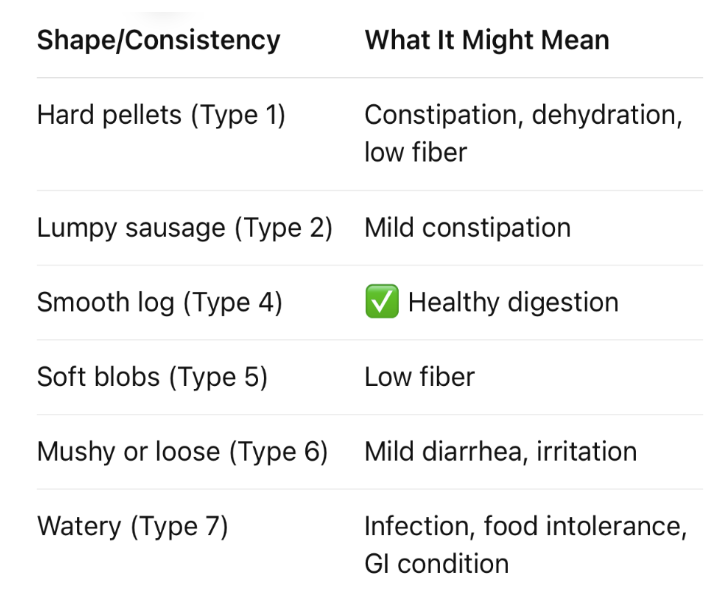
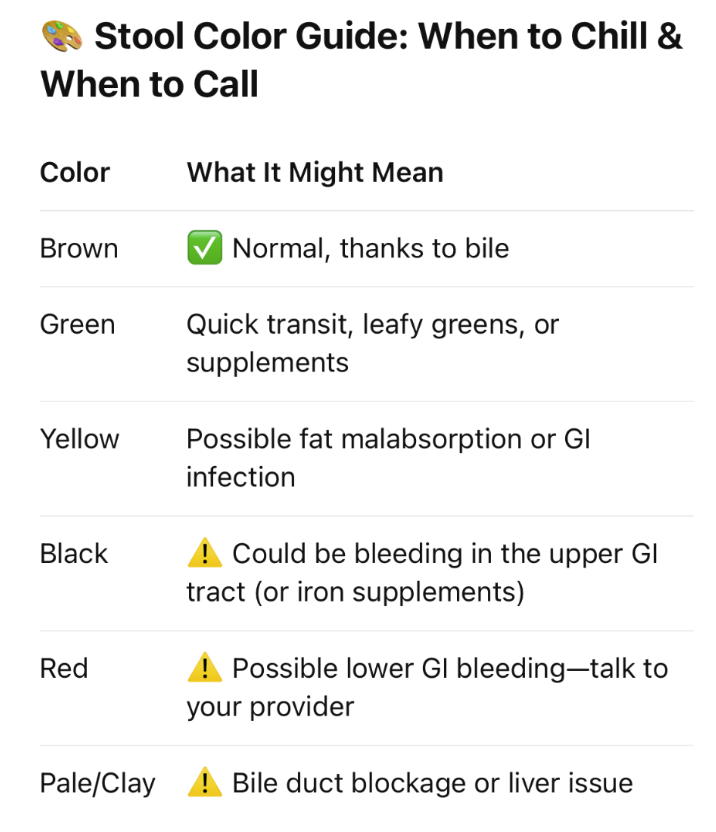
When in doubt, contact your provider—especially if unusual color is persistent or paired with symptoms like pain, fatigue, or weight loss.
Track Patterns, Not Just Panic
Changes here and there are normal, but tracking your symptoms can uncover patterns linked to:
- Food intolerances
- Stress or anxiety
- Menstrual cycle
- Travel, medications, or illness
Grab The Free Food & Poop Diary to start noticing what your gut’s been trying to tell you.
GI-Friendly Products That Can Help
Here are some affiliate-linked favorites:
- IBgard – for IBS symptoms
- Benefiber – for smoother, bilked up and more complete stools
- Poo~Pourri – because everyone deserves a graceful exit
- Sitz bath – for soothing discomfort during flare-ups
- Probiotic – to help balance your gut flora
Final Thoughts: Your Poop Is a Clue, Not a Diagnosis
Stool changes are like your gut whispering for attention. Listen early, track changes, and speak up if something feels off.
And if this post made you think, “My friend definitely needs to read this…” — hit share. Let’s normalize talking about poop.
Don’t forget to follow @gut_gossip on instagram for more real talk on digestion, discomfort, and how to finally feel good in your gut.